

An organization’s most critical assets are its employees. No one bothers to argue against that point any more. An organization’s workforce is also, however, its most expensive asset, and workforce management (the development of employees, retention of skilled talent, etc.) is consistently cited as one of the top issues facing organizations today. In a recent Aberdeen report, 60% of all organizations reported a need to improve workforce planning capabilities as a driver of their total workforce management efforts.
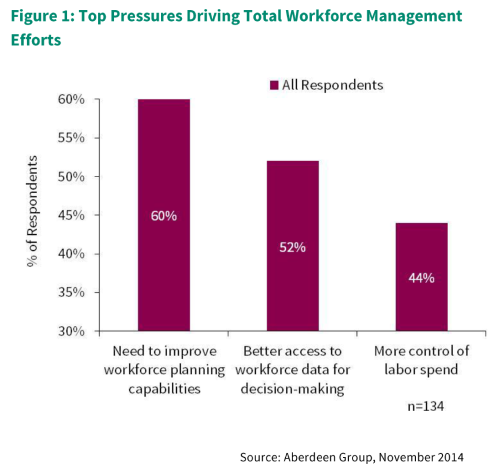
Improving workforce planning capabilities took the top spot for pressures driving workforce management efforts, but better access to workforce data (in order to improve decision-making) was close behind, 60% vs. 52%. In our current “golden age of technology” there are ample workforce management technology solutions that can help organizations with workforce management, from timekeeping and leave of absence management to labor forecasting and analytics. The adoption of automated workforce management solutions though (as with other tech solutions) has been slow among organizations. Aside from the fact that the global workforce is rapidly driving towards a place where technology and automated workforce solutions will be a necessity for companies to remain innovative and successful, we have data that show – on a much simpler level – that workforce management technology is a good investment because it offers organizations multiple financial benefits.
Research shows that the use of automated time, attendance, and scheduling solutions results in 8% to 20% lower replacement costs (as a percentage of annual pay) for hourly workers, which can be attributed to the reduced cost of administration needed to manually manage such functions. Aberdeen’s research also found that average revenue per full time employee increased four times in organizations with automated absence/leave management technology and two times for organizations with automated scheduling, time, and attendance technology.
 Organizations that automate scheduling, time/attendance and leave/absence management also saw increases in customer satisfaction levels ranging from 9.2% to 10.4% (compared to a 2.9% to 6.2% range of improvements for organizations that did not have automated solutions).
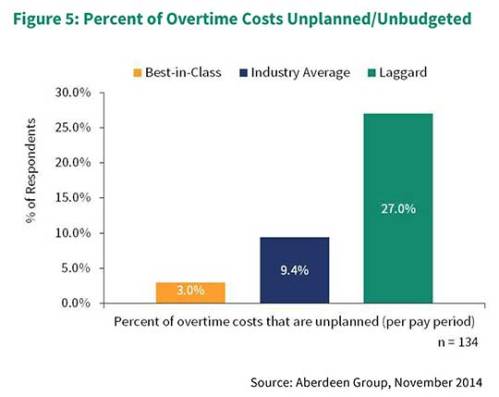
Automated workforce management solutions can also help to reduce unplanned overtime. While it’s expected of organizations to experience some overtime, having an inaccurate idea of what employees schedules will look like can quickly increase an organization’s spending. Best in class organizations experience less than 4% of unplanned overtime costs in comparison with 27% for laggard organizations. Automated solutions can help managers with critical scheduling accuracy, freeing them to give more time and attention to core business needs.
Another benefit for organizations that use automated time and attendance software is greater workforce capacity utilization. These companies have employees who, on average, work at 12% more their capacity than those who rely on manual processes or spreadsheets (83% vs. 74%). Automated leave and absence management additionally helps to lower costs by accurately tracking employees’ time off, making sure PTO is recorded as it is taken (ensuring for example, that employees are not owed leave at the end of the year they’ve earned but not taken) and by providing organizations with software to properly submit and track leave and absence requests (mitigating the impact of planned/unplanned losses).
A May 2014 report by Aberdeen found that optimizing scheduling is a key attribute of leading firms. These firms experienced consecutive years of improvement in customer satisfaction by 17.8% compared to firms who did not have a focus on optimizing scheduling and actually lowered their customer satisfaction rates by an average of -3.9%. This should be the key take-away for organizations when it comes to automated workforce management solutions – we know that automated workforce management software can drastically help organizations to improve and optimize scheduling, and this is a key attribute of successful companies. And if the slow adoption of automated solutions comes from a concern that instituting such software could turn into a micro-managing nightmare, organizations should note that, as with all tools, its about how you introduce them and support their adoption. The potential benefits of automated solutions far out-way any cons, so dipping a foot in the automated solutions pool seems well worth the risk, even if it may require an investment in training and change management. We’re already witnessing the expansion of HR and administrative roles within organizations; these functions are providing organizations with instrumentally more strategic value than they have in the past. Free up these departments time and energy from consuming workforce management tasks like monitoring attendance/leave and scheduling, and see what happens when tactical, manual roles become automated and enable more strategic data analysis and insight to enter the mix!







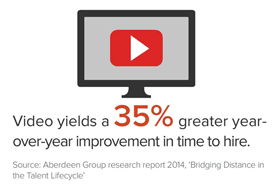
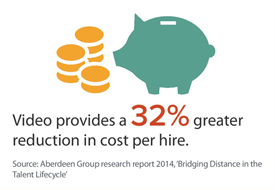 Data from the survey tells us video is widely used by HR departments across the world. Polycom’s study found that video conferencing ranked as a top-three tool for communications, with HR respondents ranking email as the number one preferred communications tool (88%), followed by voice-conference calls at 62% and video conferencing at 46%. Interestingly, HR executives who use video at work today said they would prefer video collaboration to email as their top method of business communication within three years. HR executives that participated in the study saw clear benefits of using video communication tools over other forms of communication – with 98% of the Human Resources executives surveyed reporting that video conferencing helps companies work through issues of distance and cultural barriers to ultimately improve productivity amongst their teams.
 Respondents from the survey who use video conferencing today stated that the top advantages of this method of communication are: better collaboration between globally dispersed colleagues (54%), greater clarity of topics being discussed (45%) and more efficient meetings (44%). 76% respondents report that they use video conferencing at work and 83% of respondents (nearly 90% of those in their 20’s and 30’s) use consumer video conference solutions at home today. Laptops and desktops were the most popular form of business video conferencing, followed by conference rooms, and then mobile devices.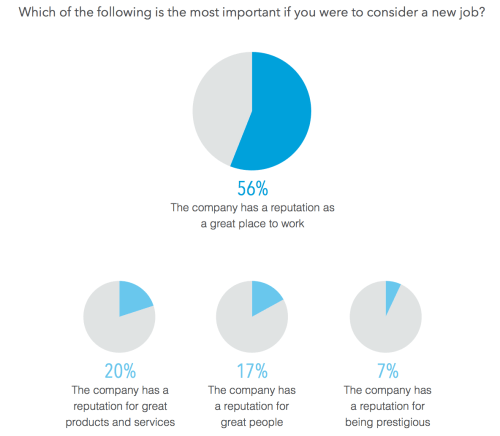




 chinagorman.com