Tag Archives: China Gorman

A Day in the Life…

One of many things that SHRM does well is to try to evaluate the services it provides to its members. So I wasn’t surprised that SHRM sent me an invitation to evaluate my experience at this year’s Annual Conference in Atlanta. And I tried to be honest. But really, how do you give feedback to an organization that executes its biggest event so well – year in and year out?

But I’ve been thinking about the question that asked what I would recommend for future Annual Conferences.  I gave a quick answer.  And I’ve been thinking about it more and I’d like to expand on my answer.

I suggest having a series of sessions called “A Day in the Life of…”  When I answered the question I was specific: engage one of the CHROs in the Fortune 100 to describe what their job and life are really like as an example for emerging HR leaders to see. We don’t see many CHROs on any stage at SHRM. I understand all the reasons why we don’t see them, but I think SHRM needs to try harder. Presenting a role model in the flesh would be high impact.

But as I’ve been thinking about it, why not also have sessions with CHROs from a privately held company with 5,000 employees, from a public company with 25,000 employees, from a large education institution, from a think tank, from a large national non-profit, and from a pre-IPO tech start-up? Not a panel discussion. A session by each of them, individually.

Not everyone in HR wants to be the CHRO of GE, but some do. Not everyone in HR wants to be the CHRO in a privately-held company, but some do. Show them what it’s like. Show them what it takes to get there – and stay there.

And then I thought, well, how about other functions? What’s it like to be the Chief Marketing Officer in the Fortune 100 – and what do they think about and want from HR?

How about a day in the life of the CFO of a global public retailer – and what they think about and want from HR?

How about the Chief Information Officer at a large privately-held technology company?

And how about the head of Total Rewards in a Fortune 250 company – how did they get there?

The head of Talent Acquisition in a Fortune 500 company – how did they get there?

The Chief Learning Officer in a global hospitality company – how did they get there?

You get my drift. A series of “A Day in Life of…” would put real leaders on the podium to share what works for them and what doesn’t work for them.  How they got there and what they’d do over again and what they would skip. And from everyone:  what advice for emerging or aspiring HR leaders.

Not only would this be interesting for intentional HR professionals, it would be helpful for those who got here by accident and aren’t sure where to go, whether or not to stay, and what is possible.  Holding successful HR (and other) leaders up for conference attendees to hear from and get coaching from might be the next big step in speaker impact that SHRM is looking for.

As with most good ideas, this came out of several conversations I had with HR leaders in Atlanta. Thanks. You know who you are.

8 Comments

Filed under China Gorman, Conferences, HR, HR Conferences, SHRM, SHRM Annual Conference

Is HR in a Bad Mood?

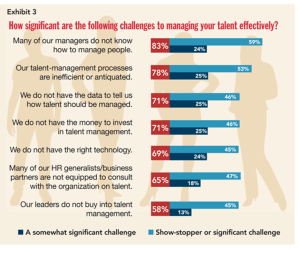
Results from The Fifth Annual Talent Management Study by Knowledge Infusion and Human Resource Executive® were published recently in HR Executive by Mike Brennan and some of the findings were surprising.

I didn’t find it surprising that 63% of the respondents report that they have trouble filling jobs and that they can’t find the right candidates. That’s been reported frequently.

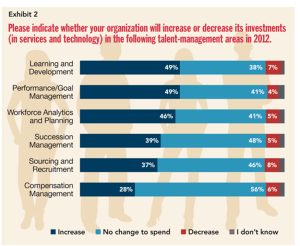
It also doesn’t surprise me that more organizations than not will be increasing their investments in Learning/Development, Performance/Goal Management and Workforce Analytics/Planning services and technology. That’s obvious.

What really does surprise me is that 58% of HR executives believe that peer leaders in their organizations “do not buy into talent management.”

Lordy, I hope this isn’t the furniture conversation. And I’m willing to believe it isn’t because 83% of the respondents also believe that “many of our managers do not know how to manage people.” Additionally, 65% of the respondents believe that “many of our HR generalists/business partners are not equipped to consult with the organization on talent.”

Ouch. Either the HR respondents to this survey were all in a colossally bad mood, or they’re starting to look clear-eyed at their organizations and re-calibrate their challenges.

It’s clear that many organizations need to look at legacy systems and programs in the talent management arena (can you say annual performance review system?) and, according to this survey, they are. But focusing on leadership understanding and managerial effectiveness in talent management might be a strong first step.

It’s a great day for HR if the results of this survey mean a new focus on talent management effectiveness – at the top, in the middle, and most importantly, in HR.

But if it was just a systemic bad mood, we’re sunk. Because, in the words of one of my favorite movie characters in one of my favorite movies, “we have serious problems to solve, and we need serious people to solve them.”

7 Comments

Filed under American President, China Gorman, HR, HR Credibility, HR Executive Magazine, HR Technology, Knowledge Infusion, Managerial Effectiveness, Talent Management

It’s a Wrap!

Well…another SHRM Conference is in the can. In Atlanta. In the Georgia World Congress Center. More than 13,000 attendees – with more than 1,000 from outside the U.S.

Here’s my assessment:  no one does HR conferences like SHRM. Period.

  • More than 200 concurrent sessions
  • High profile keynote speakers
  • World class entertainment
  • More than 800 exhibitors in the Expo Hall
  • Social media integrated throughout
  • Involvement of more than 700 local SHRM member volunteers
  • More than 350 SHRM employees

The SHRM Annual Conference is the single largest gathering of HR professionals anywhere in the world – year in and year out. And it’s motivating and exciting to be a part of that.

And while the mechanics are impeccable, the content engaging, and the crowds impressive, the real value of a gathering like this aren’t the mechanics, content and crowds. The real value of SHRM is the personal connections we make, the conversations we have, the meeting IRL of people we only know through social media, the meeting IRL of people we read about in HR Magazine, the private coaching from our mentors, the chance meetings of people who will be new personal and professional friends.

On second thought, it’s not actually a wrap, my friends. It’s a hug. It’s a hug from our profession. It’s a hug from our colleagues, our heroes, our game changers.  And who doesn’t need a hug from time to time?

4 Comments

Filed under China Gorman, Conferences, HR Conferences, SHRM, SHRM Annual Conference

Certificates: the New Associate’s Degree?

Georgetown University’s Center on Education and the Workforce has published a new report:  Certificates: Gateway to Gainful Employment and College Degrees. I’m a big fan of a previous report from these authors, Help Wanted: Projections of Jobs and Education Requirements Through 2018 and wrote about it here.

This new report gives a clear look under the hood of one of the staples of our post-secondary education infrastructure: the certificate.

Take a look. It’s not a hard read.

Uniquely American, certificates are widely varied in their positive impacts and largely ignored by private, public and government socioeconomic surveyors. The study’s authors contend that if certificates “with a demonstrated labor market value” were counted in official post-secondary surveys as “credentials” they would improve the U.S.’s post-secondary completion position from 15th to 10th among industrialized nations (OECD countries).

And 1 million certificates were awarded in 2010 – up from 300,000 in 1994.

Interesting data from the report include:

  • Certificates are the fastest growing form of post-secondary credentials in the U.S. increasing from 6% in 1980 to 22% today
  • 20% of certificate holders go on to get two-year degrees
  • 13% of certificate holders go on to complete four-year degrees
  • Workers with certificates earn an average 20% more than workers with just high school degrees

As talent management and HR professionals continue to struggle to find “qualified” workers to fill their openings, perhaps a new look at the experience and credentials they require might open a large segment of fully qualified workers – those with certificates instead of college degrees.

Something to think about.

5 Comments

Filed under Career Planning, Certificates, China Gorman, Demographics, Education Deficit, Employment Data, Post-secondary education, Talent Management, Talent pipeline, Unemployment

The Wisdom of CEOs

Booz & Company recently published its 12th annual CEO Succession Survey. It’s fascinating reading:

  • As the economy gets stronger, the numbers of CEOs leaving their jobs are rising to pre-recession rates
  • CEO turnover is highest at the largest companies
  • CEO turnover is highest in market sectors that face the most challenges
  • Outsider CEOs returned to historical averages
  • Insider CEOs bring higher returns
  • Insider CEOs serve longer
  • The combined chairman-CEO model continues to decline

With average CEO tenure declining, the survey’s data are clear that new CEOs – whether they come from the inside or the outside – are under historically high pressure to perform quickly.  (Can you say Leo Apotheker?)  And concerned boards are more frequently appointing the outgoing CEO as board chairman to provide a sort of “apprenticeship” experience in the early months of a new CEO’s tenure.  Interesting stuff.

This year, the study focused on the new CEO’s first year.  Booz & Co. interviewed a number of CEOs from around the world and asked their advice for incoming CEOs.  There were 7 common recommendations:

  1. Deal with the obvious executive team changes as early as possible
  2. Be wary of changing strategy too quickly, even if you think the current strategy is wrong
  3. Make sure you understand how every part of the company operates and how it is performing
  4. Build trust though transparency
  5. Be selective in listening to advice
  6. Find a sparring partner with whom you can discuss plans openly
  7. Manage your time and your personal life with care

The survey provides a great deal of background data and commentary on these 7 “tips” for succeeding as a new CEO — and I encourage you read it.  But I’m thinking this is great advice for any new executive at any level.

And I’m really thinking this list is great coaching for HR.

6 Comments

Filed under Booz & Company, Business Success, C-suite, CEO Tenure, CEOs, China Gorman

What’s your budget?

Great sources of free and relevant talent management data are vendor research, white papers and blogs. Of course, vendors have a bias towards research and conclusions that support their cause, but that doesn’t make the research less interesting or actionable. It just means that the reader has to understand the context.

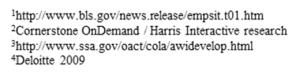
I read an interesting article in the May issue of Talent Management that referenced a survey done by Cornerstone OnDemand and Harris Interactive on performance management.  I traced the survey results back to a post on the CSOD blog by Charles Coy.  The survey data about the effectiveness of legacy performance management systems is interesting and not at all surprising.  They don’t work and everyone knows it – employees and HR.

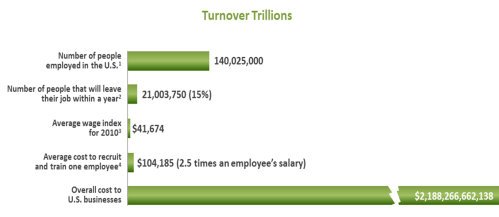
What was more interesting to me were the math and sources behind the potential price tag of $2 Ttrillion to U.S. employers in 2012 simply due to voluntary turnover.  That’s right: $2 Trillion!

$2 Trillion is a big number.  A very big number.  Could it be true?  If we take the stats one by one, it absolutely could be true.  Take a look:

Here’s the equation where E = total employees and AW = their average wage (divide total salary cost by the number of FTEs):

(E x .15) x (AW x 2.5) = Total Turnover Cost

Try the math in your organization.  If you have 350 employees and the average wage is $50,000 then

  • 350 x .15 =                                             52
  • Average wage =                                $  50,000.00
  • Average full replacement cost =   $ 125,000.00

52 x $125,000 = $6,500,000.00

And what’s your budget? 

But, you say, your voluntary turnover is only 8%, not 15%.  Well, even if that’s true – and congratulations if it is – that’s still a lot of money.

28 x $125,000.00 = $3,500,000.00

And what’s your budget?

But, you say, that 2.5 times the average wage calculation for replacement costs is way too high.  You don’t buy that the loss of an average employee means a potential loss of intellectual capital or client relationships.  OK.  How about the impact on internal relationships and getting things done?  How about the productivity and morale of colleagues left behind?  How about the experience and job skills that you’ve lost?  Add in the hard costs of recruiting a new hire, the onboarding time, the training time to full productivity and you’ve still got a big number – even if you found and hired replacements really quickly.  Try the math at 1.5 the average wage as the full replacement cost.  With 8% turnover and 1.5 times the average wage, that’s still a big number

28 x $75,000.00 = $2,100.000.00

And what’s your budget?

And what if your voluntary turnover is higher than 15%?  Or what if the training time to productivity is longer than average?  Or what if you – like 52% of employers – can’t find the replacement talent quickly or at all?  Then the impact will be greater.  Much greater.

This is a useful discussion because it can help create a context for the broader conversation about the real cost of voluntary turnover and the cost savings in having an engaged workforce.  It can be part of the rationale in a business case for investing in any of the levers that will increase retention and reduce turnover.

It’s almost budget time in most organizations.  Financial resources are still scarce.  As you plan your 2013 budget requests for more spending on talent management solutions, be prepared with fact and data.  This might help.

1 Comment

Filed under Average Wage, Budget, China Gorman, Cornerstone OnDemand, Engagement, Harris Interactive, Talent Management, Turnover, Uncategorized

Data Source Highlight: SHRM Foundation

From time-to-time we won’t discuss a particular data point, we’ll highlight a particular data source.  Due to the ubiquity of content on the web, it’s important to find trustworthy and relevant sources of data.  Today, I recommend the SHRM Foundation.

You don’t have to be a SHRM (Society for Human Resource Management) member to avail yourself of the wealth of knowledge published for free by the SHRM Foundation, SHRM’s separate 501(c) (3) nonprofit affiliate.  The Foundation’s mission is to “advance global human capital knowledge and practice by providing thought leadership and educational support, and sponsoring, funding and driving the adoption of cutting-edge, actionable, evidence-based research.”

In addition to providing scholarships to SHRM members for degree completion and certification, the Foundation performs two very important functions for the Human Resources profession:

  • It is one of the leading funders of rigorous academic HR research
  • It creates educational resources for the profession, including EPGs (Effective Practice Guidelines) which makes research findings easily accessible.

I make this introduction to the Foundation because many in HR don’t know what the Foundation does for all HR professionals – SHRM members or not – and so don’t avail themselves of the research that is practical and relevant to the job of HR.

Of the most useful of the Foundation’s products, EPGs integrate current research findings on what works in real life with expert opinion on how to conduct HR effectively and have been published on a wide array of topics critical to talent and organization management success.  Recent EPGs have included:

  • Human Resource Strategy
  • Promoting Employee Well-Being
  • Recruiting and Attracting Talent
  • Retaining Talent
  • Developing Leadership Talent

Case in point:

HRM’s Role in Corporate Social and Environmental Sustainability, the newest in the series of Effective Practice Guidelines (EPGs) from the Foundation.

Want a readable, rigorous overview of how HR can integrate CSR and environmental sustainability into the culture of an organization?  Want to know what new competencies you need to develop to be a credible leader in this regard?  Want a roadmap to embed CSR and ER into an organization’s mission so that “its impacts on employees, communities and their stakeholders align with the sustainability vision” of the organization?

In 31 pages, noted CSR experts Elaine Cohen, Sully Taylor and Michael Muller-Camen provide an extraordinary review of what the research says, what effective practice looks like, the inclusion of several case studies and the introduction of successful organizational models – all written for easy consumption by HR practitioners.  It’s a goldmine of information.

For example, early in this EPG, a discussion of the different manifestations of CSR ends with this very useful diagram:

This visual, based on work by Archie Carroll, brings useful context to any business discussion about CSR – and would be a strong starting point for any business case an HR professional would bring forward.  The Foundation’s EPGs are full of these kinds of easy to understand and extremely useful data points.

If you aren’t familiar with the SHRM Foundation’s EPG series, I recommend that you visit their site and start browsing the titles.  I guarantee that after reading one you’ll not only feel smarter – you’ll actually  be smarter.

Full disclosure:  I served on the SHRM Foundation Board of Trustees from 2007 – 2010.

2 Comments

Filed under Corporate Social Responsibility, CSR, Effective Practice Guidelines, Environmental Sustainability, SHRM, SHRM Foundation, Uncategorized

Data Point #9: Employer Loyalty Isn’t Dead? Wait. What?

MetLife published its 10th Annual Study of Employee Benefit Trends on March 19th, 2012.  At 80 pages, it’s a read.  But it’s a fascinating read.

The report shows clearly that the strong role of workplace benefits in driving employee attraction, retention and productivity continues as reported by these MetLife studies during the last 10 years and persists today during the slow economic recovery.  Interestingly, the study correlates satisfaction with benefits to employee job satisfaction, and also shows clearly that employees who are dissatisfied with their benefits are more likely to want to work somewhere else.

The data are fascinating.  And I recommend the investment of 30 minutes to read it through.

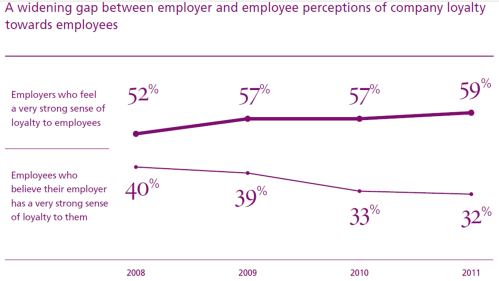
The data point that I found most interesting in the study follows:

I haven’t seen anyone discuss employer loyalty to employees in a long time.  I think I assumed, by looking at other trends, that the issue of employer loyalty was long dead.  Building employee loyalty, however, was a whole other discussion:  we call it employee engagement.  And employers are starting to pay attention to this issue because of the rapid shift in workforce demographics coming down on us like a load of bricks. (See my posts on this topic here and here.)

But where has been the focus on employer engagement? Have we all assumed that employer loyalty is dead and gone forever?  That employees “know the score” and don’t expect employers to be loyal to them?  Well, MetLife reports that between 2008 and 2011 employer loyalty scores have increased 5% from 52% to 59%!  Wait.  What?

In the same time period, however, the perception by employees that their employers are loyal to them has decreased 8% from 40% to 32%.  How pitiful is that?  Employers think they’re doing better, but employees aren’t getting the message.  And in fact, more of them aren’t getting the message as time goes on.

I think this is interesting.  Despite all the attention being paid to employee engagement – through salary, through benefits, through recognition, through providing strong ethical cultures, through providing meaningful and interesting work — in fact, the study finds evidence of a widening disconnect between employers and employees.

Job insecurity and expectations that benefits will be cut may well be contributing to employees feeling less important to their employers.  This “loyalty gap” presents an immediate opportunity for HR and C-Suite leaders to really step up communication and feedback about their increased loyalty.  Of course, the proof is in the pudding, and for employees to believe that their employer is growing more loyal to them, they are going to have to see a change in behavior – if they stick around long enough.

6 Comments

Filed under China Gorman, Culture, Demographics, Employee Benefits, Employee Loyalty, Employer Loyalty, Engagement, MetLife, Talent pipeline, Uncategorized

HR Rockstar Tour

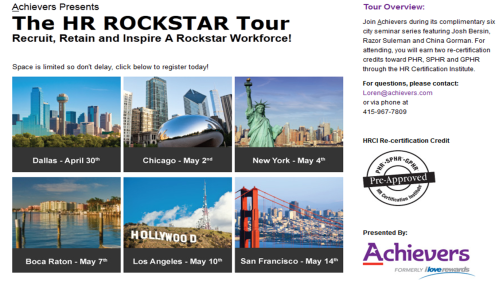
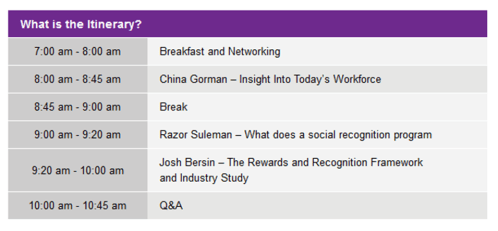
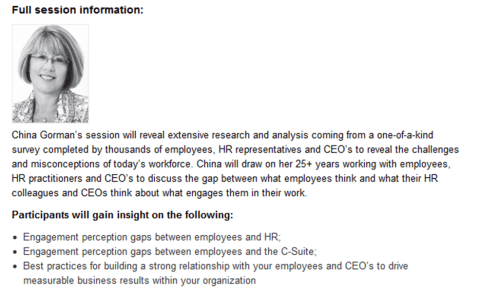
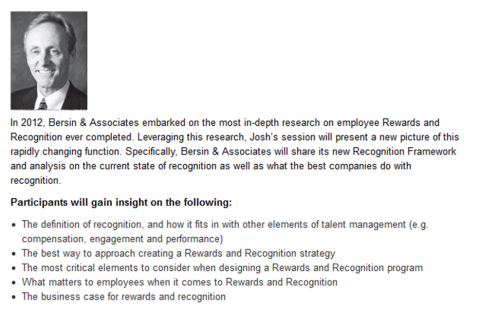
If you live in Dallas, Chicago, New York, Miami, Los Angeles or San Francisco I’d like to invite you to attend a complimentary seminar that introduces and discusses groundbreaking new research and analysis about Recognition and Rewards.  Sponsored by the good folks at Achievers, this will be great morning with a little breakfast, a little networking, a couple of HRCI credits — and a whole lot of new data about what’s working to engage employees more effectively.  Join me, Josh Bersin and Razor Suleman.  I guarantee that you’ll leave smarter than when you arrived.  It happens to me every time I’m with Josh and Razor.  It can happen for you too.  Just  send an email to Loren Maisels at Achievers asking for an invitation (Loren@achievers.com) or call her at 415-967-7809.  Tell her I invited you.

2 Comments

Filed under Achievers, China Gorman, Demographics, Engagement, Josh Bersin, Razor Suleman, Rewards & Recognition, Uncategorized

Data Point #5: We Can’t Succeed Without Baby Boomers

In earlier Data Point Tuesday posts (here and here) I’ve recommended the Bureau of Labor Statistics’ website as a treasure trove of talent management related data.  Another great source of useful information is SHRM, the Society for Human Resource Management.

SHRM’s research group works tirelessly to bring relevant, actionable trend and survey information to its members.  And if you aren’t a member (why aren’t you?), the value of SHRM’s research services alone is more than the cost of membership. *

Workplace Visions is part of SHRM’s Workplace Trends and Forecasting program and is published multiple times each year – as new data become available.  The reports are useful signposts for new developments that impact organizations, talent management and HR professionals.

The first such report published this year is “Changes to Retirement Benefits:  What HR Professionals Need to Know in 2012” (member protected).  It’s full of useful observations about changes coming to 401(k) plan rules, Social Security changes to keep an eye on and great data from EBRI (The Employee Benefits Research Institute).

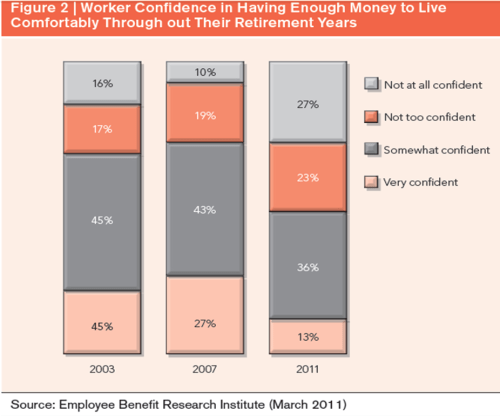
One of the discussion points piqued my interest:  data from EBRI about the reduction in confidence by Baby Boomers that they will have enough money in their retirement years to live comfortably.  See the chart below.  This has big potential impact for employers.

The aha! is that while a steady stream of Americans still plan to retire in their early to mid-60s, many more workers are unsure when they’ll be able to retire – or if they’ll be able to retire.  As you can see from the chart, in 2007 70% of EBRI survey respondents reported some level of confidence in their retirement plans.  That number fell to 49% in 2011.  SHRM also cites data from Towers Watson surveys with similar outcomes.

What does this mean for talent management professionals?  Well, SHRM thinks that providing a stronger hand in retirement planning and financial education for Baby Boomers will help reduce retirement-related anxiety.  I absolutely agree.

Additionally, though, SHRM counsels HR professionals to “weigh the positives and negatives of employing an older workforce.”   They counsel that “older workers are often costlier to keep on board, due to higher salaries and health benefits costs.” Woah.  The  thought that employers will have robust options besides Baby Boomers and other older workers to staff their organizations isn’t supported by the demographic trends.

My take is a little different.  Here’s what the data say:

  • the U.S. population is growing more slowly leading a more slowly growing civilian work force (http://bls.gov/news.release/pdf/ecopro.pdf),
  • the Baby Boom generation moves entirely into the 55-years-old+ age group by 2020 and will represent 25.2% of the work force (up from 13.1% in 2000)
  • the “prime-age” labor cohort (ages 25-54) is projected to drop to 63.7% (from 71.1% in 2000) of the work force

So the engagement, development and retention of Baby Boomers and other older workers will be a very critical part of most organizations’ talent strategies because they’ll make up 25% of the available work force.  Providing incentives to stay, financial education for pro-active retirement planning and unique engagement strategies — among others — will all be part of talent strategy in 2020.  There won’t be any weighing the positives and negatives of employing an older workforce.  But there will be significant effort spent in figuring out how to keep the Baby Boomers’ skills, talents,and  organizational knowledge in play in the work force — and in our organizations.

At 25% of the available workforce, there won’t be other options.  We won’t be able to succeed without Baby Boomers.

*Full Disclosure:  I am SHRM’s former Chief Operating Officer

8 Comments

Filed under Baby Boomers, Bureau of Labor Statistics, Business Success, China Gorman, Demographics, Employment Data, HR, Retirement Planning, Talent Management, Talent pipeline, U.S. Department of Labor