

I’m not generally big on infographics. I find them self-serving and hard to read and digest. Here’s an exception. It’s called Unprepared for College and was posted on the College@Home.com blog.
I’ve written about the non-performance of the U.S. education system in preparing our future workforce here and here. This infographic puts the issues front and center. I don’t see how we can continually turn away from this data.
- Half of all college students drop out before receiving a degree
- 1 in 4 college freshman don’t complete their 1st year
- Over half-a- million college freshman drop out every year
But wait. It gets worse:
- 80% of college freshman say high school is too easy but
- 5 out of 10 college freshman can’t find New York or Ohio on a map of the U.S.
- 9 out of 10 can’t find Afghanistan on a map of Asia
- 3 out of 10 can’t find China on a globe
- 4 out of 10 can’t find Israel, Iraq or Saudi Arabia
- 7 out of 10 can’t find North Korea
And worse:
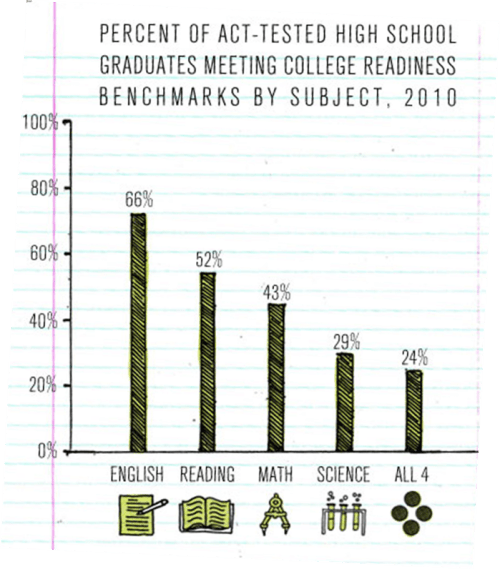
And then there’s this:
- 4 out of 5 students currently pursuing a math or science degree feel that their K-12 education did not prepare them for college
- 2.2 million college freshman are learning high school material in college
- 80% of students in remedial classes in college had a high school GPA of 3.0 or higher
- 20% of freshman with a 4.0 high school GPA need remediation in math, English or both
- And 8 out of 10 freshman believed they were ready for college when they graduated from high school
The bottom line? Only 56% of students enrolled in a 4-year program receive a degree within 6 years.
So. What are we doing about this? Government can’t or won’t act. We can blame teacher unions, local governments, state governments, the voting public, parents, the students themselves – but none of that helps solve the problem.
Seems to me that business in general – and HR specifically – needs to step up to the plate. After all, we’re the ones most concerned with the unskilling of our populace. We’re the ones who know the most about the kinds of skills we need today and the kinds of skills we’ll need tomorrow, and next month and in the years to come. I think it’s up to us. What do you think?

 1.) Have a tactical plan to stay on top of regulatory (pay particular attention to NLRB rulings and timetables for implementation of the Affordable Healthcare Act) and legislative changes coming from your city, your state house and Washington D.C.











 chinagorman.com