
Most people in the HR space know Glassdoor™ as a social media site that gathers anonymous information about employers from current and former employees. Users can leverage their Facebook network to uncover connections at a company, view current openings, as well as review proprietary information that includes salary reports, company reviews, interview questions, CEO approval ratings and more. It’s an incredibly useful site for job seekers to get the real skinny on a potential employer from the people who know it best: its employees.
Of course, for employers and HR professionals, the site offers a full array of branding and recruitment-oriented services including the ability to create enhanced company profiles, Facebook career profiles, targeted job ads and more.
But for our purposes at Data Point Tuesday, we like Glassdoor™ because of its Quarterly Employment Confidence Survey. Couple this report with monthly BLS reports and you get a robust picture of workforce and employer confidence and other dynamics.
For example, the Glassdoor Employment Confidence Survey surveys employees on their confidence in the areas of pay raises, job market expectations, company outlook and job security. It’s great data and it’s presented in a highly consumable format.
The most recent survey was conducted by Harris Interactive between June 12 and 14 of 2,208 adults 18 years or older and was published on July 6. Generally the data show improving or holding steady opinions on workplace confidence dynamics by employees with the exception of optimism in pay raises. This dropped since last quarter to 40% (from 43%), while 37 % do not expect a pay increase – a low since the survey began in Q4 2008.

At first glance this seems a little off. Expectations for a raise are at the lowest point since the 4th quarter of 2008 – and lower than the 4th quarter of 2008 when the economy was at its worst? Aren’t we starting to feel better about the economy? Well, some of us are and some of us clearly are not! The report says this:
- Employee optimism in pay raises has dropped slightly since last quarter to 40%, while 37% reported they do not expect a pay increase…
- The gender gap is closing around expectations for a pay increase over the next 12 months; 41% of women expect an increase compared to 40% of men. However, men’s optimism around pay has declined five percentage points since last quarter while women’s optimism crept up one percentage point.
- Younger workers are significantly less optimistic about pay raises than last quarter; 37% of 18-34 years olds expect pay raises in the next 12 months whereas nearly half (49%) expected raises last quarter. All of the other age ranges have increased 2-4% from last quarter – 48% of 35-55, 42% of 45-54 and 36% of 55+ year olds.
So, if I read this right, men and young people under 35 report strong declines in optimism about pay increases while women report slight increase in optimism.
Men: down 5%
Young people: down 12%
Women: up 1%.
How does this track with your turnover and engagement data? Tracking turnover data by gender and age demographic is common. How about engagement data? Can you make connections between this lack of reported paycheck optimism among males and young people to the engagement data in your organization? It might be worth a look.
And it might be worth keeping an eye on during the coming quarters – particularly in relation to the election in November. Young people played a very active and pivotal role in the last presidential election. Is their level of paycheck pessimism such that they won’t participate as strongly? Or will it motivate them to even higher levels of activism? And how will that translate to your organization’s turnover and engagement rates?
This is what’s so great about data. They let you connect import dots. Also, they always raise more questions than answers – but if you’re interested and aware you’ll start asking more of the right questions and connecting critical dots. And who knows? That could lead to formulating more effective people management and business risk mitigation strategies.
Isn’t that what HR is all about?


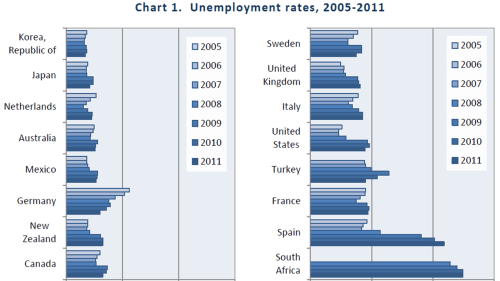
 As we prepare to attract, develop and retain skilled workers around the world, who works and who doesn’t work is interesting to me. So I thought I’d share the following charts that I ran across in a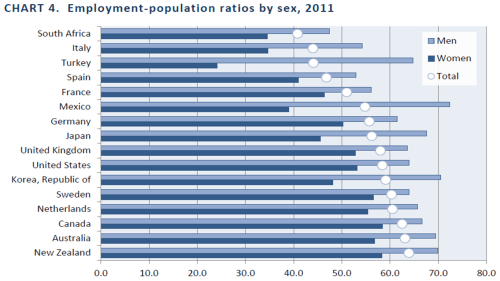




 Unlike Spenser, Owen has an incredible MacGyver-like ability to come up with solutions – theories of the crime as well as solutions to sticky problems. Owen doesn’t back down from a fight, but he rarely resorts to violence relying instead on his ability to out-wit and finesse the bad guys. And this capability really saves the day in Tahoe Trap.



 Here’s the thing: I know that HR professionals know the difference between FTE and Head Count. But somehow, when surveys need filling out, confusion reigns.




 chinagorman.com