Layoffs Planned? What’s An Employer Brand To Do?

Like most companies, you’ve focused a lot lately on your employer brand.  Why?  Because you are paying attention to data that does more than suggest that the tie you have to your employees is growing more tenuous by the day.

You see the data:

  • Job satisfaction has been moving downward and is now at an all time low:  according to the Conference Board, only 45% of America’s workforce report being satisfied with their employment experience.
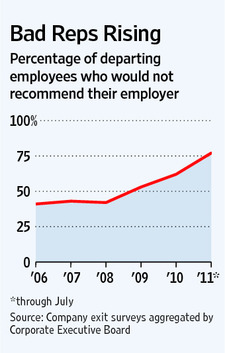
  • Over the last 6 years, the percentage of departing employees who would not recommend their employer has grown from 42% to 75%, according to company exit surveys aggregated by Corporate Executive Board
  • The percentage of all employees leaving their employers who are leaving voluntarily is growing – and now greater than the percentage of employees who are laid-off according to current BLS data.
And now, like HSBC, Cisco, Bank of America and a growing group of other employers, you’re about to announce a layoff.  A major layoff.  And like most employers, you still have critical job openings in several sectors of the business and in various locations around the world.  And you’re predicting talent shortages in many of your critical operations.  A layoff.  Really?

What’s an employer brand to do?

With the fluid nature of today’s global workforce, you know it’s critical that you maintain a positive employer brand so that you can retain the critical talent you have and continue to attract (and in the future rehire) top talent.

What’s an employer brand to do?

You know that over the course of the next decade recruiting top talent is going to continue to become more and more challenging and you realize that the way you treat employees on their way out of the organization has now become as important as how you treated them on the way in – now more than ever.  The way you treat someone during the upcoming layoff will decide – for them and their network – whether they would ever consider working for your company again.

Remaining employees have always watched how impacted employees were treated during a downsizing or restructuring event.  But now, as the Boomers are beginning to make other plans, as Gen X is itching to see the fruits of their labor, and as Gen Y is yearning to work for organizations that are changing the world – the perception of how their former colleagues are treated will have a significant impact on your company’s employer brand, how loyal they will remain to the company and ultimately how easy it will be to retain them.

In these days of lightning speed feedback on hundreds of social networks, one negative comment can spread like wildfire.  Treating employees with dignity and respect as they exit the company can do a lot to mitigate the risk of that happening.

What’s an employer brand to do?

Revisit your severance policies and make sure that outplacement services are front and center.  Companies like yours that have invested in your employment brand could easily see that investment go up in smoke quickly without providing immediate, 21st century job finding services like cloud-enabled virtual services that harness the power of social networking sites and semantic search engines to automatically and continuously deliver personalized job leads.

Truth is, there are outplacement organizations that are taking advantage of cloud computing, semantic search, virtual technology, and up-to-the-minute content being created by experts every day.  The harnessing of these technology and content-components have done two things that are important to employers:  they’ve driven cost out of the service and they’re helping former employees find jobs faster – saving UI costs and severance costs, in some cases.  Finding new jobs fast is the point.  For all the stakeholders.

While the traditional bricks and mortar outplacement firms are certainly “bolting on” some technology solutions to their learning based processes, and their consultants are learning how to harness LinkedIn and FaceBook for networking purposes, there are new entrants to the space – technology based entrants – that are redefining this industry’s processes, outcomes for laid-off employees, and deliverables to the employer.

Job boards, social networks, and the ubiquity of information about employers on the web have certainly changed the way people at all organizational levels and all levels of experience look for jobs today.  In many ways, job boards and social networks have made finding the right job a much more complex activity. Your outplacement solution needs to help untangle those complexities while motivating your former employees to move forward quickly.  Nothing will take the sting (and negative social media activity) out of job loss like finding a great new job fast!  And that’s good for your employer brand.

What’s an employer brand to do?

Be sure to review your outplacement policies before you take another step in the downsizing process.  Providing more service to more people could actually save you money.
More importantly, providing the right service can save your previous employer branding investment – because employees who feel supported as they leave their organization and who find great jobs quickly – continue to be employment brand ambassadors for you.

They won’t be part of the 75% of departing employees who don’t recommend their former employer.

4 Comments

Filed under Uncategorized

Should Executives Embrace Social Media?

This was originally posted on the MonsterThinking blog on July 29, 2011 found here.

As business leaders, we’ve always known our customers talk about their experience with us.  Sometimes it’s good…sometimes, well, not so much.

Ten years ago, heck, five years ago, if we really cared about what our customers were saying to their families and friends about their experiences with us, we sent surveys to find out what they were thinking, feeling and saying.

Today?  Well, we’ve got the social web to provide a ready and steady stream of information about what our customers, employees, competitors, stockholders, investors, vendors, suppliers, analysts, employment candidates, neighbors and random strangers are thinking, feeling and saying about our organizations.

In fact, there’s so much information flowing that new departments within the customer service, public relations, sales, marketing, human resources, legal and investor relations divisions (and sometimes in all of them simultaneously) are being created to monitor what’s being said by whom and to figure out what to do about it.

With all the noise, with all the new tools (it’s not just Twitter and YouTube anymore), with all the organization attention being paid, why should an executive enter into the world of social media – beyond their personal LinkedIn account and FaceBookpage?  Here’s one executive’s story:

When I was leading SHRM (the Society for Human Resource Management, with more than 250,000 members in over 140 countries) as its Chief Operating Officer, I became aware of a pretty large group of very smart, very active and leading edge HR professionals who were quite vocal about their disdain for the organization.  They were talking with each other through various social and new media tools and had accidentally (I think) created a community that I thought of as the “anti-SHRM gang.”

But here was the thing:  they were terrific HR leaders and consultants.  They were experts in the field.  Many were certified by the Human Resource Certification Institute.  They were active in learning and sharing their knowledge as mentors and coaches – formally and informally.  They were great!  Many of them are future Fortune 500 Chief Human Resource Officers.  And except for their anti-SHRM sentiments, they were just like SHRM members…with one major exception:  they were experimenting with and diving head long into the world of social media.

It was very clear to me that these were just the folks SHRM needed as members at the national level and leaders at the local level.  They included all the age demographics – this wasn’t just a GenX thing.  And they were writing blogs, hosting and participating in internet radio shows, innovating ways to use Twitter – all in an effort to create a community of like-minded professionals.  (They were also innovating ways to use social media applications to make their practice of HR more effective and efficient.)  And I couldn’t get them out of my head:  I wanted them involved in moving SHRM forward.

So I took up the challenge and created a Twitter account.  Because I wanted to be transparent about who I was, I chose the handle @SHRMCOO (now @ChinaGorman).  I wanted to let them know I was lurking.  I would ask questions from time to time and I re-tweeted comments I found interesting.  And I began to comment on blog posts that I thought were controversial.  But mostly, I listened and responded with lightning speed if anyone asked me a question.  In short, I listened.  I didn’t try to “tell” anyone anything.  I didn’t try to recruit new members.  I didn’t try to sell conference registrations.  I simply engaged in order to learn what was on the mind of these future members.  And I learned a lot!

The bottom line is that I made myself available in a transparent way to engage with our customers and potential customers.  And although I was just one executive at the world’s largest HR association, the symbolism to the full HR community – members and nonmembers alike – was powerful for our organization.  This community began to see SHRM in a new light.  “If a SHRM executive was engaged with social media, maybe this isn’t my father’s/mother’s HR association after all.”  And several of them joined and began to get involved.  That was good, and I’m glad for that, but what was most important was to hear their voices, understand their issues, and engage them in conversation.  We enlarged our community not by being willing to embrace the uncharted new world of social media but by taking advantage of a new source of business intelligence that informed us about what was on the minds of our audience.  And so we grew in relevance.  A good thing that created lots of benefits for the organization.

Does social media pose organizational risks?  Absolutely!  But to ignore those in-the-moment opportunities to engage a new or current customer, save a former customer, support an employee or just see a new way of thinking about your products or service puts your organization at a competitive disadvantage.

So go ahead and put together your LinkedIn profile and begin to populate a BeKnown network on FaceBook.  But be open to the richness of data available throughout the social web – and don’t just rely on your PR and marketing teams to report their findings to you.  It means so much more when you engage yourself!

China will be speaking at Talent Net Live on July 29 in San Antonio, TX.  Her track, Is Engagement the Antidote for Turnover?…Well, Maybe promises to be a lively session in which she’ll listen a lot!

8 Comments

Filed under Uncategorized

China Gorman Joins RiseSmart Strategic Advisory Council

Former COO of SHRM and president of Lee Hecht Harrison and DBM says RiseSmart has “cracked the code” in outplacement solutions.

SAN JOSE, Calif. (July 27, 2011) – RiseSmart, a leading provider of next-generation outplacement solutions, today announced that China Gorman, former chief operating officer of the Society for Human Resource Management (SHRM), has been appointed to the company’s strategic advisory council.

“China is one of the foremost thought leaders in the field of human resources today; she is also an accomplished executive with significant experience in career transition services,” said Sanjay Sathe, founder and CEO of RiseSmart. “We look forward to her strategic contributions as we continue to increase our share of the $3 billion outplacement market.”

Gorman has held strategic leadership roles in human capital management for more than 25 years.   Prior to joining SHRM in 2007, Gorman had tenures as president at two of the largest career transition consultancies – DBM North America and Lee Hecht Harrison, where she also served as chief operating officer.

“I am excited to join RiseSmart’s strategic advisory council, because I truly believe this company is transforming corporate outplacement to the benefit of transitioning workers and their employers,” Gorman said. “RiseSmart has cracked the code by creating a results-oriented, virtual outplacement solution that makes traditional approaches seem lumbering and inefficient by comparison.”

Gorman travels extensively throughout the world speaking to business, professional, corporate and academic groups.  She serves as chair of the board of trustees of the Council for Adult and Experiential Learning (CAEL) and is on the board of Jobs for America’s Graduates (JAG).

A native Midwesterner, Gorman earned a bachelor’s degree from Principia College and has completed significant post-graduate work in organizational development at National Louis University.

About RiseSmart

RiseSmart is a leading provider of next-generation outplacement solutions. The company leverages a cloud-based technology platform, proven methodologies, and one-on-one support to help employers with their workforce strategy, and displaced employees with their career strategy. RiseSmart drives significant ROI to organizations by offering affordable pricing while reducing unemployment insurance taxes and severance costs. RiseSmart has received a wide range of awards and recognition from organizations including Red Herring, TiE, the Stevie Awards, SiliconIndia, the San Francisco Business Times and the Silicon Valley/San Jose Business Journal. For more information, visit http://www.RiseSmart.com.

1 Comment

Filed under Uncategorized

Who cares about your candidates’ experiences?

Are the experiences job seekers and candidates have with your organization on the minds of anyone at the top of your house?  Does anyone in your organization connect the dots between your corporate brand, employment brand and candidate experience?

Paying attention to the candidate experience is the logical next step as organizations confront the looming talent shortages in many geographic and skill areas.  Thought leaders in the recruiting field are suggesting that automated ATS replies to job candidates and the all-too-common resume “black hole” are negatively impacting many organizations’ ability to attract top flight talent and begin creating relationships with them – relationships that end with employment.

Some really smart people in the recruiting field are stepping out on the edge and calling attention to the need for better candidate experience practices by creating an award to recognize those organizations whose processes show that attending to candidates in a more respectful way has a positive impact on their ability to build talent communities and to actually hire the talent they need.

Gerry Crispin, Elaine Orler, Mark McMillan and Ed Newman have created The Talent Board to manage the North American Candidate Experience Awards which will be awarded at the 2011 HR Technology Conference in October.  The three-round process is easy to complete and gathers information from your organization about the experiences prospects and job seekers have when interacting with your recruitment processes and people.  Even if you aren’t selected as a winner this year, you’ll get to receive feedback on how your organization compares with the others in the competition and how you might improve your recruitment practices in this area.


Gerry, Elaine, Mark and Ed are just the people to put meat on the bones of this conversation.  And announcing the awards at HR Tech is brilliant.  I encourage you to fill out the initial questionnaire – it takes less than 15 minutes – and apply before June 30.  You’ll be starting down the path of connecting the candidate experience and your employment brand to your broader corporate brand and strengthening all of them.

Not a bad way to start the summer.

3 Comments

Filed under Uncategorized

Happy Anniversary!

Because I’m looking for a job I haven’t gotten personal (or controversial) on my blog.  I’ve wanted to “curate” my digital footprint so that I don’t offend a potential employer or referral.  But I’m going to be personal today.  Really personal.

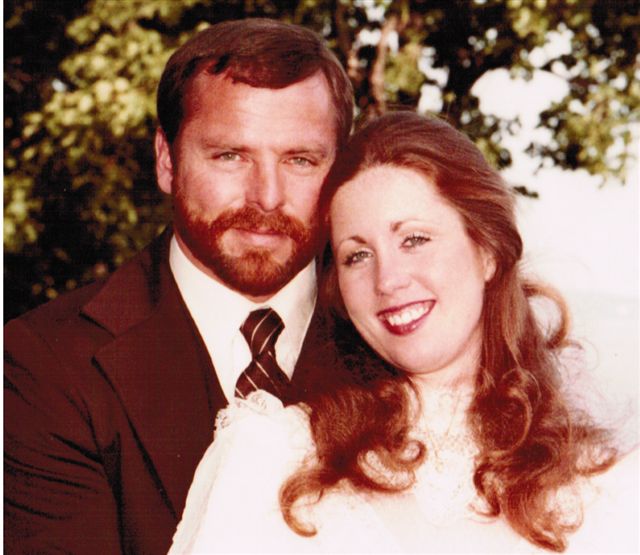
Today is my husband’s and my 28th wedding anniversary.

I can’t even comprehend what that means.  28 years of loving and being loved by a most exceptional man.  A good man.  A principled man.  A generous and kind man.  A man who knows who he is and who chose to walk beside me through life.  A man who has supported me emotionally, metaphysically and in every other way imaginable.  He’s supported my career (including 9 geographic moves and several instances of living apart when our jobs were in two different cities) in ways that most wouldn’t or couldn’t understand.

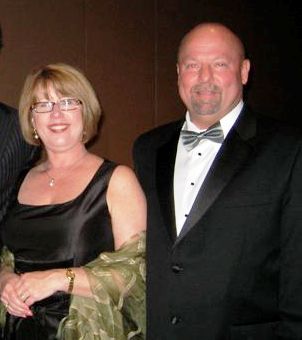
He’s my coach, my confidant, my cheerleader and my business advisor.  And my best friend.  He has dressed up in a tuxedo to escort me to black-tie business events; he has traveled around the world with my business colleagues; he has left great jobs because I had promotional opportunities.  He is a good man.

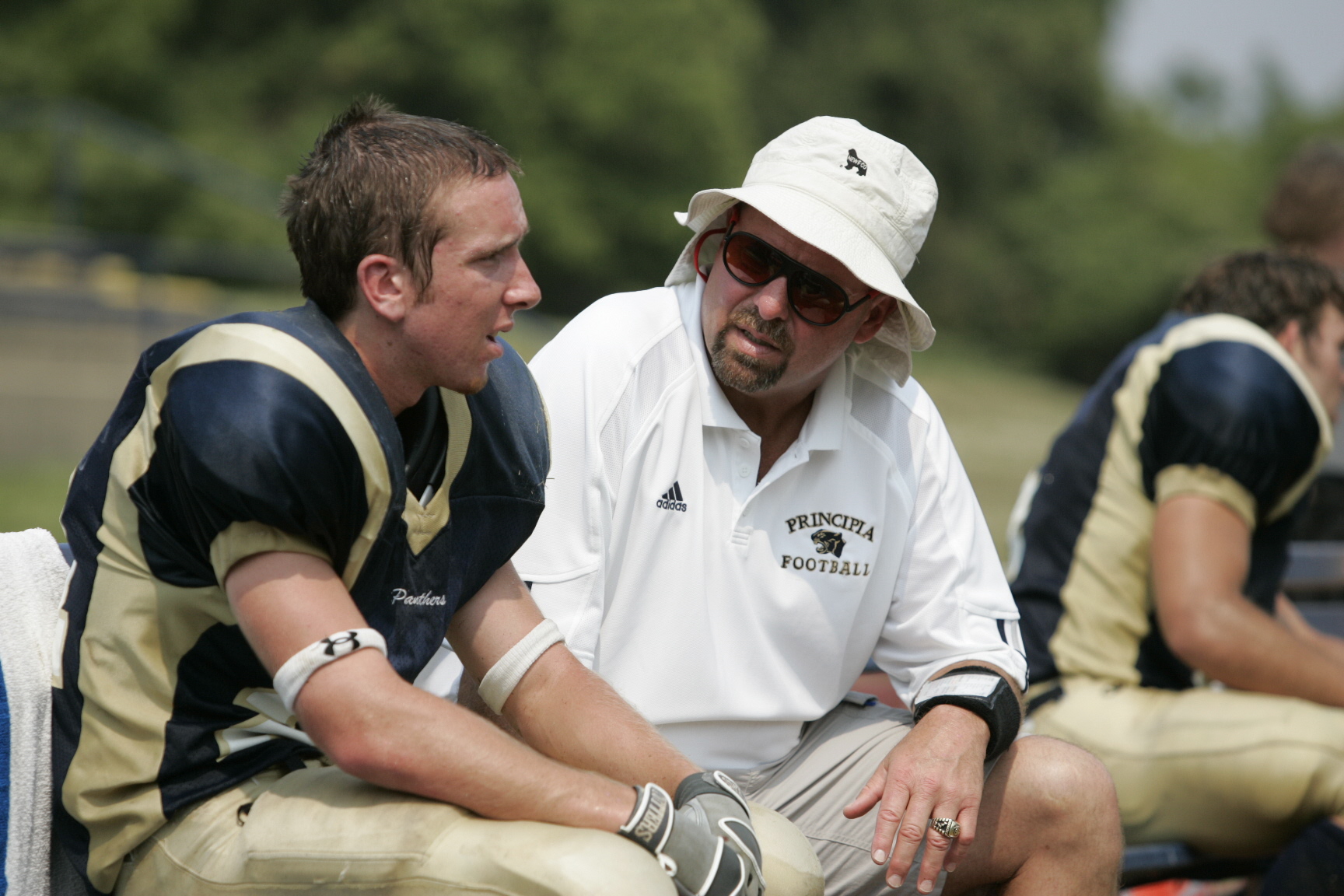
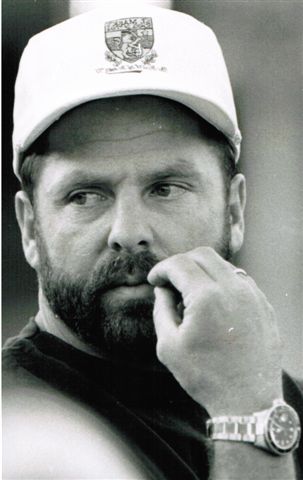
My husband, the coach, is the coach you want your kids to be coached by.  He’s the coach who tells his high school football team to go home and hug their mother and shake their father’s hand and thank them for their love and support.  He’s the coach who tells his college women’s track team members to embrace their inner “stud” while embracing their femininity.  He’s the coach who tells his high school wrestling team “we may not win every match but we’ll be in better shape than every other team we meet – increasing our chances of winning.”

He’s the coach who treats the gifted athletes and the uncoordinated “wanna-be’s” exactly the same – as long as they’re working as hard as they can.  He’s the coach who treats the rich parents exactly the same as the parents who struggle to provide for their families — as long as they’re supporting their child’s development as a complete person.  He’s the coach who treats female athletes the same as male athletes – that is, with respect, support and encouragement.  He’s the coach who never gives up on a kid who gives it all they’ve got.  Favoritism isn’t in his vocabulary.

I don’t know who loves him more:  the student athletes because he treats them with respect; their fathers because he’s a former NFL coach; their mothers because he focuses on character development; or the school administrations because his his athletes get good grades, because he models good sportsmanship and his teams win.

This man has changed my life.  More importantly, he’s changed the lives of hundreds of young people over the years.  Former student/athletes who are now community, religious and business leaders.  Former student/athletes whose children are now competing – and are calling their coach for advice.  Former student/athletes – now business leaders – who look back at key practice situations and send messages of thanks for requiring so much from them and always thinking the best of them.

It’s an honor to be Mrs. Ira-John Gorman.  I use the “Mrs.” with great pride because my partner is the most extraordinary man I know.  And I love him more today than I did 28 years ago when we said “I do” in a small chapel with two friends standing up for us.

We could never have predicted the amazing life we would live together.  But 28 years later, I’m grateful that God brought us together.  More grateful than words can express.

48 Comments

Filed under Uncategorized

Memo to Baby Boomers: You Don’t Want to Lose Molly!

When you’re our age, sometimes it’s hard to remember.  Actually, most times it’s easy to forget what it was like to be starting out, to be the kid on the team, to be one step behind, to feel awkward, not to know your way around.  It’s easy to forget what being young was like – because it was a long time ago.

In case you’re having trouble remembering what it was like when the way ahead was full of promise, when every task assigned was an adventure, when getting a project to coordinate was like getting a promotion, when a “well done” from someone more senior kept you motivated for days, when turning 25 meant you could rent a car on your own, let me introduce you to Molly.

Molly graduated a couple of years ago with a major in graphic design from a small, excellent liberal arts college in the Midwest.  She went on three “study abroad” programs (to Peru, Barbados and Spain) to become fluent in Spanish, was on the volleyball team, danced in a couple of musicals, produced a campus comedy/improv group and got good grades.  She was a hard worker in and out of the classroom, working summers in her father’s manufacturing business.  A most valuable player in every aspect of her college years.

Before she graduated she had a job offer from an alum who was building a small startup division of a specialty retailer.  He needed a Marketing Coordinator who would be a most valuable player for the business and be willing to grow and develop with the organization.  A true entry level position.  She would have to move to Denver and then to the West Coast to the retailer’s headquarters if the team met their goals.

In the first 12 months on the job, Molly did a little bit of everything including planning logistics for a trade show and designing and producing the division’s first product catalog.  She was eager to learn, worked hard and nothing was beneath her.  Every assignment was a growth opportunity.  Every business trip an opportunity to expand her contacts.  She took on more and more complex and critical projects and became the go-to person on the team.

When the team made the move to the West Coast, there was no question that Molly would make the move too.  So now, under the full view of the corporate marketing team, Molly has more opportunities to learn, to get involved with bigger projects and to gain valuable experience.

Molly just turned 25, has 2 years of work experience and knows she could probably propel her career forward a couple of notches by leveraging her experience to find that next big step in a bigger company.  But she’s not doing that.  She’s thrilled with her colleagues and her boss and her company.  Her job continues to provide extraordinary experience and skill development and she’s proud of her work, her progress and her company.

But the keys to her “stickiness” are her relationships.  The relationships with her new boss, the division president and other corporate leaders who are coaching her and providing her with great learning opportunities and actionable feedback.  It’s all about how they care for her as a person and as a professional so why would she consider leaving?

I saw her work first hand last week when she produced an extraordinary marketing event at a company here in Las Vegas that is distributing her division’s products.  She was wrangling celebrity chefs, two CEOs, the press, the production crew, her senior management team and the logistics teams from both organizations like a pro.  She was confident, on top of every detail, and the event was gangbusters great.

So why discuss Molly?  Because she’s a lesson for all of us Boomers who believe all the hype about how different (and difficult) the GenYs among us are.  I think it is hype because in Molly I saw myself at 25.  And it made me think that, although the context of starting a career has changed significantly in the last 30 years, people are still people.  Young people want to learn, want to be trusted, want to try their wings.  They want their bosses to invest in them and care about them as people.  They want to be respected.  That’s what I wanted when I was 25.  And 30, and 40, and 50.

I loved talking with Molly and hearing the excitement in her voice, feeling the energy she exuded, and knowing the slight fear of not delivering what was expected – all at the same time.  Because I remembered when that was me.  Like Molly, I was lucky to have found organizations and bosses willing to create real relationships with me and to provide incredible opportunities for learning and development.  To trust in my abilities and to take risks in my intelligence and inexperience.

Strip away all the technology, the mobile apps, the globalized economy, and the effects of the recession and remember what it was like to be an excited, inexperienced kid full of dreams about how our fabulous career would unfold.  And then take a new look at the GenYs in your organization and talk with them the way you wanted to be talked to 30 years ago.  Create solid, real relationships with them and coach them the way you wanted to be coached.

While my Molly is certainly special, I think there are a lot of Mollys out there.  And the key to keeping the Mollys in your organization is creating real, personal relationships with them.  Trust me.  You don’t want to lose Molly!

22 Comments

Filed under Uncategorized

Two Sides of the Conference Coin

I had the great good fortune to attend two HR conferences last week:  HRevolution in Atlanta and Bersin & Associates’ IMPACT: the Business of Talent in St. Petersburg, Florida.  HRevolution was a one-day conference; IMPACT was a two and-a-half day conference.

IMPACT was about introducing new research focused on HR effectiveness; HRevolution was focused on discussing HR’s opportunities to transform itself.  IMPACT is a traditional conference; HRevolution is an unconference.  And both were outstanding.

130 activist HR professionals descended on Atlanta on Friday afternoon.  This was the third HRevolution unconference organized by Trish McFarlane, Ben Eubanks, Steve Boese and Crystal Peterson, a team who wanted to provide an alternate HR conference experience to those who couldn’t afford the big ticket conferences and who wanted a community energizing experience to kick-start their learning.  The HR activists who attended this week came from all over the world, from all walks of HR life and who were bound together by the relationships they have created on the social web.  Yes, there were tweeters, bloggers, FaceBookers, LinkedIners: all manner of social web inhabitants.  All there to solidify their relationships in person and take their online discussions to a deeper level.

While billed as an unconference, HRevolution was more of a highly-participative structured conference.  An opening keynote by Liz Gottung, CHRO of Kimberly Clark started the day with a frank overview of HR’s opportunities and goals in a legacy-burdened, paternalistic culture.  Her candor about her leadership challenges was motivating to the attendees who then made their way to a series of breakout discussions on topics like “If HR is so bad, what you doing about it?” “Pop Culture, Politics, and HR”, “Diversity and Inclusion = Innovation in the 21st Century” and “Designing HR for Influence.”

Few of these sessions used PowerPoints and session leaders – discussion leaders, really – expected  attendees to jump in to the discussions at hand.  And they did!  It was fun to sit with Courtesy of Monster30 or 40 other knowledgeable HR-related folks and debate topics like “If a high EQ is so desired in leaders why do such a high proportion of CEOs have low EQ scores?” and “what is influence and how can HR professionals develop more of it?” and “why do we insist on creating activity-controlling policies for flexible workers when we should be focusing on measuring outcomes?” and, well, you get the point.

One particularly engaging session, “HR Slam,”  broke the attendees into groups and asked them to solve an actual business problem provided by the session leaders.  A small, family-owned chain of restaurants is experiencing sudden and unexpected turnover in its small group of managers and asked for suggestions on how to move through their crisis.  The group with the most compelling and complete set of recommendations won $50 gift cards, so the competitive juices were flowing.  The restaurant chain owners ought to pay attention to the advice that was generated:  it was remarkable.

The toughest criticism I heard all day was that there were too many great sessions led by too many great leaders to pick which sessions to attend.  I felt the same way.

At the end of the day, HRevolution was a success because it was flawlessly planned and executed, the attendees came to play, the session leaders engaged with their attendees, and a spirit of camaraderie pervaded the space.

IMPACT introduced several new Bersin & Associates research reports by its analysts, all deeply knowledgeable and engaging speakers.  The research overviews were impressive, presented in actionable bites and gave the attendees just enough information so that the value of the full reports was crystal clear.  Made me want to go home, get on their website and download everything they’ve got.  And I am doing just that.

Additionally, IMPACT featured a number of in-the-trenches HR leaders who shared what was happening in their organizations on such topics as the use of social media in strategic staffing (AT&T, Actuant, Darden), re-building HR as a critical business performance asset (UnitedHealth Group), improving organization effectiveness by creating a robust HR analytics/business intelligence function (Eaton, Accenture), successfully leading organization change (Kaiser Foundation, CA Technologies), and transforming business through learning (SunTrust Bank, Thomson Reuters, The Cheesecake Factory, Teradata Corporation, Cisco Systems).

Sponsors of IMPACT, solution providers, were provided a large Demo Room to set up tables and engage with attendees.  It was a sort of genteel expo, not the usual frenetic tchotchke-laden expo hall.  Quite enjoyable, actually.

I really enjoyed all the built-in opportunities to network with the other attendees.  There were 3 receptions and robustly timed lunches and breaks.  The whole conference experience was designed for 450 senior HR leaders (they sold out and turned away 40+ more!) who don’t need a lot of noise and hoopla to engage, discover and learn.  I did all three.

So.  Two great conferences.  Two great experiences.  Two different audiences (although 3 of us were at both).  I really appreciate that there are many options for HR professionals to come together and learn.  I like seeing the trend of HR professionals reaching out for what they need in new ways – and conference organizers responding with new kinds of experiences.  There truly is something for everyone.

My only complaint?  Sponsors at every conference I’ve attended this year have raffled off IPads.  I haven’t won any of them.

5 Comments

Filed under Uncategorized

Don’t miss this conference!

IMPACT 2011: The Business of Talent® is almost upon us.  This year’s theme is Building the Borderless Workplace and is organized by my friends at Bersin & Associates, this conference is a must for HR pros and leaders who are interested in learning how to link HR practices and people-driven strategies to business results.  And I wouldn’t miss it!

More than 30 (!) in-the-trenches HR and business leaders will share their experiences and present in-depth case studies including representatives from Accenture, Archer Daniels Midland Company, Caterpillar, Energizer Holdings, Inc., JetBlue Airways, Kelly Services, Lockheed Martin, Scotiabank Group, Starwood Hotels & Resorts and The Cheesecake Factory.  And Bersin analysts will discuss their latest research on innovative approaches to recruiting, effective learning cultures, continuous learning, new models for leadership development, high-impact HR, and much more.  The conference is April 26-28 at the Renaissance Vinoy Resort & Golf Club in St. Petersburg, Florida.

Most interesting to me will be the ability to network with the speakers, the analysts and more than 300 other HR and business leaders attending the conference.

And, for readers of this blog, my friends at Bersin are offering a $100 discount off the already-discounted registration fee of $995 for members and $1295 for non-members!  To reserve a spot, go to http://impact.bersin.com/ and enter the promotional code CHINAG.

Let me know if you’re attending – we can meet up for coffee and compare notes!

Leave a comment

Filed under Uncategorized

I Heart Recruiters!

I guess I’m an HR Conference junkie.  Because here I am at my first EREexpo and I’m lovin’ it!  (With apologies to McDonald’s.)

EREexpo is presented by the folks at ERE.net – led by David Manaster.  Because he knows I know HR conferences, he asked me if I had any suggestions for him.  And you know what?  I don’t.  He and his team have done a spectacular job.  I’m going to go out on a limb and say that it’s the best conference – altogether – that I’ve attended in the last 12 months.

Networking:

The nearly 500 attendees are here to engage with the content and each other.  I’ve been to a lot of HR networking events in my time, and these recruiters and talent acquisition leaders know how to network.  At the jam-packed opening reception last night the connections and re-connections being made were a thing of beauty.  These folks came to meet their peers, share the latest in “what works” and help each other be more effective.  Aggressively open and supportive.

Speaker Selection:

I am absolutely impressed with the quality of the keynotes and breakout sessions.  The Keynotes are all practicing recruiting leaders.  Leaders of actual recruiting functions inorganizations.  Practitioners.  Organization leaders.  So their content is full of current examples of what their organizations are really doing in the field. These aren’t sales pitches from consultants or “motivational” stories.  Actual relevant and actionable content by practitioners in the field.

Breakout sessions – only three at a time – are also nearly all led by practicing recruiting leaders.  The consultants who are presenting are true thought leaders.

Social Media:

I am thrilled to see that all the keynotes and one session per breakout time is being live streamed for any interested viewer.  Free.  As in no cost.  How’s that for using the power of social media to strengthen a community and drive stickiness to a brand?  During coffee breaks the great Steve Boese from HR Happy Hour is streaming live interviews with speakers and other notable attendees to keep the content flowing between sessions.  A truly brilliant move on ERE’s part – and not just because I was one of the interviews.

Awards:

This really caught my attention.  The ERE Recruiting Excellence Awards presentation took a 90 minute keynote slot.  There were 8 categories and representatives from the top 2 finalist organizations in each category were on the stage.  That’s 16 people sitting on the stage.  The winners and 1st runners up were announced live very attractive trophies were presented.  So far pretty normal.

Then the magic started.  The chair from last year’s conference moderated the winners and the audience in a panel Q&A/discussion session that let the audience look under the hood of the winning organizations’ strategies and tactics from the people who led the innovations.  I’ve never seen such engagement between a panel and an audience.  There were more questions than than time to answer.  (Of significant interest to the audience were the successes with putting wounded warriors to work at some very impressive organizations)  It was a very powerful session.

Venue/logistics:

The Manchester Grand Hyatt in San Diego is a stellar conference property.  The conference rooms are set up classroom style with table covers – a very nice touch.  Very comfortable and accessible.  ERE sprang for complimentary WiFi throughout the venue for attendees – a meaningful differentiator.  Other conference organizers should note that feature.  The food is pretty good, the staff is extremely accommodating and the sleeping rooms are lovely.

What else can I tell you?  This conference is the complete package.  Excellent content from current practitioner/leaders, excellent social media approach, excellent execution on the logistics.

The most impressive things about this conference, though, are the attendees.

recruiters.

9 Comments

Filed under Uncategorized

The King of All Social Recruiting

    You know how Howard Stern is the King of All Media? 

     I now declare Bill Boorman King of all Social Recruiting.

I’ve just returned from TruLondon, a social recruiting unconference.  It started on Wednesday with a day of Master Classes – unlike any Master Classes you’ve attended.  These were 45 minute sessions led by experts on topics ranging from Global Diversity (one of the sessions I led) to HR Challenges to  Personal Branding to Case Studies of Rackspace, Hard Rock Café and Zappos (another session I led).  The session leaders presented prepared remarks for 10-15 minutes and then opened the floor to questions and discussion.  Three sessions, sometimes four at a time, gave the attendees a real smorgasbord of learning and opportunities to engage.  Thought leaders and practitioners from all over the world attended, although the U.K. and the U.S. seemed to represent about 85% of the crowd.

On Thursday the real two-day unconference began and the meetings rooms overflowed with energy, expertise and passion for social recruiting.  TruLondon was, quite simply, a happening. 

A couple of words about Bill Boorman, the self-described conference disorganizer, and host to all the track leaders, sponsors and attendees.  He’s like the ring leader at the circus.  He keeps the lions at bay, makes the elephants behave and keeps the horses jumping through flames of fire – all while delighting the crowd.  If the timing isn’t quite as posted, if the speakers’ topics change at a moment’s notice, if a speaker doesn’t show:  no matter.  Our genial host was out in front ensuring that everything ran smoothly.  And it did.  In a manner of speaking.  Because the focus was on engagement not precision of operations.  I rather liked that.

Bill collected an incredible array of talent and expertise from the global social recruiting scene to lead sessions and to participate in the discussions.  In fact, it was hard to tell the experts from the attendees:  everyone was energized and passionate about connecting, learning and sharing.  It was less of a conference and more of a revival meeting.

From my perspective attending TruLondon provided a rich and meaningful experience:

  • I met many social recruiting experts from all over the world with whom I’ve connected through social media but never met face to face
  • I learned so much about the intersection between recruiting, social media and technology – especially what’s happening that’s innovative and bleeding edge
  • I have a much greater understanding about job boards and their role in the employment cycle (thank you, JobSite!)
  • And I have a sense that the confluence of global talent needs, the recruiting function, social media and technology holds great promise for organization leaders as we create sustainable strategies for managing our talent and our talent pipelines
  • And, it was in London, my favorite city in the world

Bill’s Tru Unconferences – coming to a new city every month this year – need to be experienced.  If you are a recruiter – internal or third party, if you are an HR professional, if you are involved in talent communities, heck, if you just want to hang out with smart visionaries and talk one-on-one with thought leaders in this space, you should attend a Tru Unconference.  But come ready to share, to engage, to network, to connect and to participate. 

And leave your notions of what a recruiting conference should be at the door.

20 Comments

Filed under Uncategorized